Road geotechnics in Savannah, Georgia, encompasses the essential engineering discipline that bridges the gap between the region's challenging soils and the long-term performance of its transportation infrastructure. This specialized field focuses on investigating, analyzing, and designing the earthworks and foundation layers that support all types of pavement systems. From the sandy lowlands near the coast to the more clay-rich upland areas, a thorough understanding of subsurface conditions is not merely beneficial; it is a fundamental requirement for preventing premature pavement failure. The category covers the full lifecycle of a roadway's ground interaction, including site investigation, soil stabilization, embankment construction, and drainage design, ensuring that every layer beneath the asphalt or concrete is engineered to withstand traffic loads and environmental stressors.
The unique geology of Savannah presents a complex tapestry of soil conditions that directly impacts every road construction project. The area is predominantly situated within the Atlantic Coastal Plain, characterized by deep deposits of unconsolidated sediments. Near the surface, engineers frequently encounter layers of loose, poorly graded sands, soft organic silts, and highly plastic clays, often with a high water table that can be just a few feet below the ground. This combination creates significant challenges, such as poor bearing capacity, high shrink-swell potential in clay-rich zones, and a susceptibility to erosion and scour. A critical local consideration is the prevalence of 'sugar sands,' which lack cohesion and require specialized stabilization techniques to create a stable working platform and a durable subgrade for any pavement system.
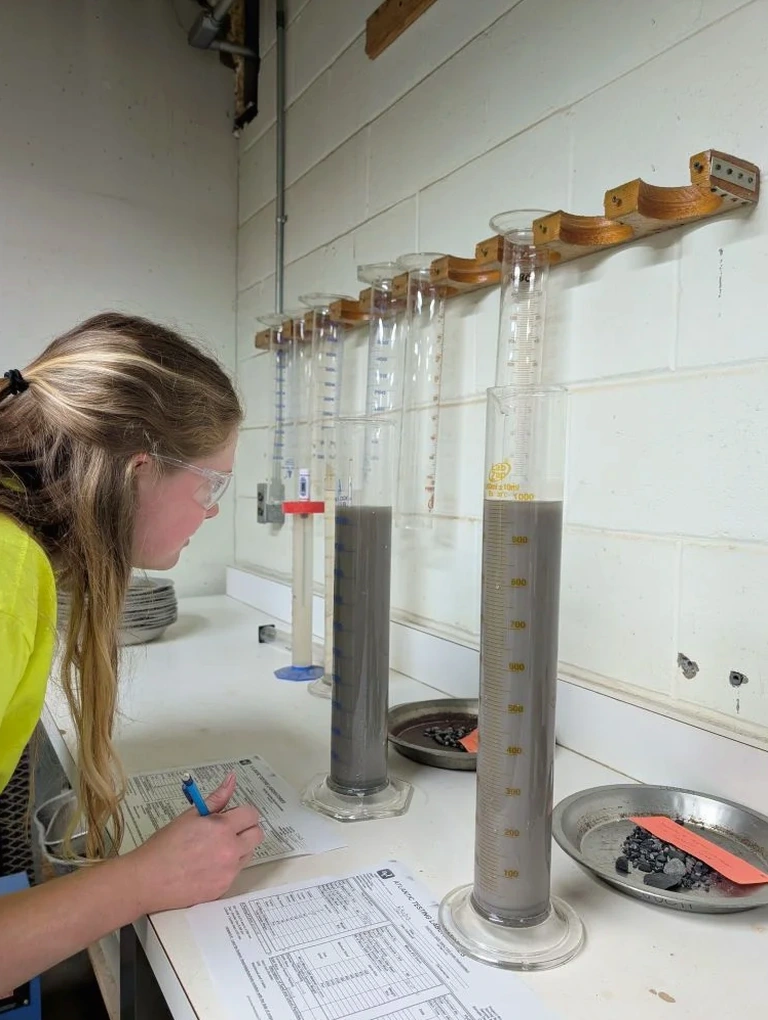
All road geotechnical work in Georgia is governed by the stringent standards set forth by the Georgia Department of Transportation (GDOT). The primary guiding document is the GDOT Standard Specifications for Construction of Transportation Systems, which meticulously outlines requirements for subgrade preparation, soil classification, compaction, and materials acceptance. Supplementing these specifications are the GDOT Geotechnical Manual and the AASHTO LRFD Bridge Design Specifications, which offer the framework for subsurface exploration programs, laboratory testing methodologies, and the engineering analysis of slopes, retaining walls, and foundation elements. Adherence to these standards is not optional; it is a legally mandated protocol for any project within the public right-of-way or funded by state or federal sources, ensuring a uniform level of safety and reliability across Savannah's road network.
This category of activities is indispensable for a wide array of project types, from new greenfield developments to the rehabilitation of Savannah's historic, tree-lined boulevards. A detailed CBR study for road design is often the first critical step, providing the empirical data needed to evaluate the strength of the native subgrade and design an appropriate pavement structure. For commercial and residential subdivisions, a flexible pavement design is frequently selected for its cost-effectiveness and adaptability to minor ground movements. In contrast, high-traffic arterial roads, industrial logistics centers, and port facilities that support the Georgia Ports Authority typically demand a rigid pavement design to offer superior durability and resistance to heavy container truck loads. Each project, whether a simple parking lot or a complex interchange, demands a tailored geotechnical approach to manage subsurface risk effectively.
Common questions
What is the most significant geotechnical risk for road construction in Savannah's coastal environment?
The most significant risk is the presence of weak, compressible soils and a high groundwater table. Loose sands and soft organic silts common to the coastal plain offer poor bearing capacity and are prone to settlement. This requires rigorous subgrade stabilization, often through chemical treatment or mechanical reinforcement, to create a stable platform that prevents differential settling and pavement cracking, all while managing near-surface water.
How do Georgia DOT standards influence a geotechnical investigation for a new roadway?
GDOT standards dictate every phase of a geotechnical investigation, from the depth and spacing of soil borings to the specific laboratory tests required. The GDOT Geotechnical Manual prescribes methodologies for classifying soils, assessing sulfate content for chemical stabilization, and determining design parameters. All reports and recommendations must conform to these protocols to be accepted for permitting and construction within the state's right-of-way.
What is the difference between a subgrade and a base course in road geotechnics?
The subgrade is the native, prepared soil foundation upon which the entire pavement structure rests, and its stabilization is a core geotechnical task. The base course is an engineered aggregate layer placed directly on top of the subgrade. Its primary functions are to distribute traffic loads evenly to the subgrade, offer a capillary break against groundwater, and act as a drainage layer to protect the soil foundation from saturation and weakening.
When is a geotechnical evaluation required for a road project in Savannah?
A geotechnical evaluation is mandatory for any public road project and is a prudent requirement for all commercial and residential developments. It is triggered during the planning and design phase for new construction, significant widening, or rehabilitation of failing pavements. Any project requiring a grading permit or connecting to a GDOT-maintained route will need a report sealed by a licensed professional engineer to demonstrate compliance with local and state codes.
Location and service area
We serve projects across Savannah Georgia and surrounding areas.