Geotechnical laboratory testing forms the analytical backbone of any construction or infrastructure project in Savannah, Georgia. This category encompasses a suite of standardized procedures designed to classify soils, determine their engineering properties, and predict how they will behave under load, moisture changes, or environmental stress. In Savannah's coastal plain setting, where soft marine clays, loose alluvial sands, and high groundwater tables dominate the subsurface, laboratory data is not merely supplementary—it is essential for safe foundation design, slope stability analysis, and earthwork quality control. Without precise laboratory characterization, engineers would be forced to rely on conservative assumptions that often lead to overdesign or, worse, unexpected failures in the region's challenging soils.
The geological context of Savannah makes laboratory testing particularly critical. The city rests on Pleistocene and Holocene deposits of the Atlantic Coastal Plain, characterized by interbedded layers of sand, silt, and clay deposited during successive marine transgressions and regressions. These soils often contain organic material, shell fragments, and variable cementation that can dramatically alter their mechanical behavior. Of particular concern are the expansive and compressible clays found in the Port Wentworth and Garden City areas, as well as liquefiable sands mapped by the USGS along the Savannah River corridor. A detailed grain size analysis (sieve + hydrometer) provides the fundamental particle distribution data needed to identify these problematic materials, while Atterberg limits testing quantifies the plasticity characteristics that govern shrink-swell potential and consolidation settlement risk.
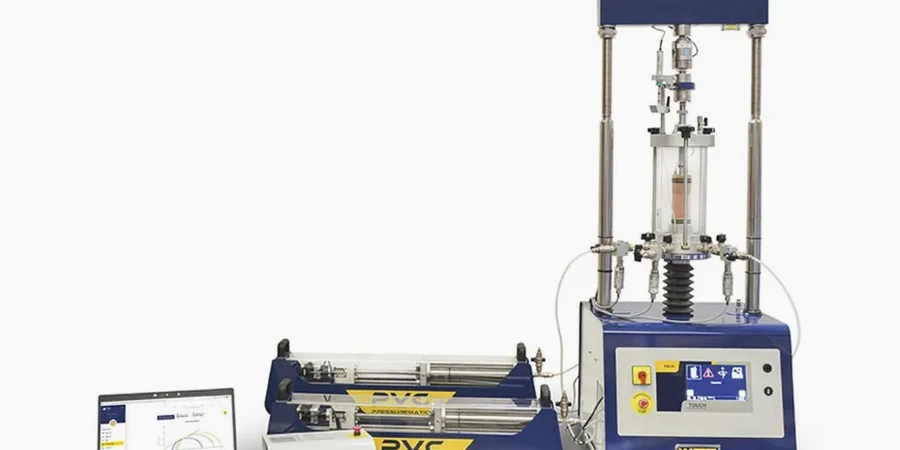
Laboratory testing protocols in Savannah must comply with standards established by ASTM International and AASHTO, which are referenced throughout Georgia's building codes and GDOT specifications. ASTM D422 governs the hydrometer method for fine-grained soils, while ASTM D4318 standardizes liquid limit, plastic limit, and plasticity index determination. The Georgia Environmental Protection Division also requires specific laboratory analyses for projects involving soil remediation, landfill construction, or stormwater infiltration design. For federally funded transportation work through GDOT, AASHTO T 88 and T 89/T 90 are the controlling standards. Adherence to these norms ensures that results are legally defensible, comparable across projects, and acceptable to Savannah's permitting authorities, including the City of Savannah Development activities Department and Chatham County Building Safety and Regulatory activities.
The range of projects that demand comprehensive laboratory testing in Savannah is broad. Deep foundation systems for mid-rise structures in the Historic District require consolidation and shear strength parameters to design piles that can reach competent bearing strata through soft surficial soils. Port expansion at the Georgia Ports Authority's Garden City Terminal relies on laboratory compaction curves and permeability data to construct stable container yards and mitigate settlement. Roadway widening along I-16 and I-95 corridors uses laboratory CBR values and resilient modulus inputs for pavement design, while residential subdivisions in Pooler and Richmond Hill need shrink-swell testing to comply with foundation warranty requirements. Even smaller commercial developments benefit from a targeted laboratory program that includes grain size analysis and Atterberg limits testing to confirm site soil assumptions and optimize earthwork specifications.
Common questions
Why is laboratory testing necessary for construction in Savannah when field tests like SPT or CPT are already performed?
Field tests offer continuous profiling and in-situ estimates but cannot directly measure index properties, shear strength, consolidation characteristics, or chemical composition. Savannah's interbedded coastal soils often contain thin layers that field tools average or miss entirely. Laboratory testing on undisturbed samples recovers the precise parameters needed for constitutive models and regulatory compliance, ensuring designs reflect actual material behavior rather than correlations developed for different geologic settings.
How long does a typical geotechnical laboratory testing program take for a Savannah project?
Standard classification tests like grain size analysis and Atterberg limits typically require 3 to 5 business days after sample receipt. More advanced procedures such as consolidation or triaxial shear testing may extend timelines to 2 to 3 weeks due to required saturation, consolidation, and shearing stages. Rush turnaround is often available, but project schedules should account for Savannah's high demand periods during the dry construction season when laboratory backlogs are common.
What laboratory tests are most important for evaluating shrink-swell soils in the Savannah area?
The Atterberg limits suite—liquid limit, plastic limit, and plasticity index—is the primary screening tool for expansive soil potential. Soils with plasticity indices above 25 are considered highly expansive. Supplemental testing including percent passing the #200 sieve from grain size analysis and clay mineralogy identification helps confirm the nature of the active clay fraction. Suction testing and consolidation-swell tests offer quantitative heave predictions for foundation design in Savannah's problematic clay units.
Are Savannah laboratories required to hold specific certifications for GDOT or federal projects?
Yes. Laboratories performing testing on Georgia Department of Transportation projects must maintain current GDOT qualification in the relevant test categories through the Office of Materials and Testing. For federal work, AASHTO Accreditation Program (AAP) certification is typically required. Many Savannah firms also pursue USACE validation for Corps of Engineers projects and AMRL/CCRL inspection to demonstrate proficiency in ASTM and AASHTO methods, which are mandatory for most public-sector work in the region.
Location and service area
We serve projects across Savannah Georgia and surrounding areas.