Ground improvement in Savannah, Georgia, encompasses a range of geotechnical engineering techniques designed to enhance the mechanical properties of subsurface soils, ensuring they can safely support structural loads. This category is critical in Savannah due to the prevalence of soft, compressible soils that pose significant challenges for construction. From commercial developments along the Savannah River to residential expansions in Chatham County, the need to mitigate settlement and increase bearing capacity is paramount. Without proper ground improvement, projects risk excessive differential settlement, liquefaction during seismic events, and long-term structural instability, making these solutions a foundational requirement for sustainable development in the region.
Savannah's geology is dominated by Coastal Plain sediments, characterized by loose alluvial sands, silts, and soft clays deposited by ancient marine transgressions and the meandering Savannah River. The upper soil profile often includes layers of loose to medium-dense sands interbedded with highly plastic, saturated clays, which are susceptible to consolidation and settlement under load. The high groundwater table, typically within 5 to 10 feet of the surface, exacerbates these issues, increasing the risk of soil liquefaction in sandy strata during seismic events. These local conditions demand specialized ground improvement strategies, such as stone column design to reinforce weak cohesive soils and vibrocompaction design to densify loose granular deposits, ensuring a stable foundation medium.
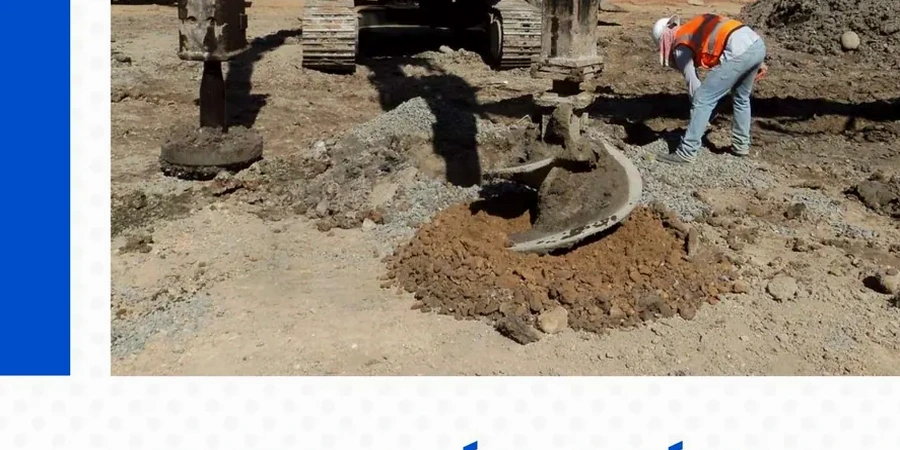
Regulatory compliance in Savannah is governed by the International Building Code (IBC) as adopted by the State of Georgia, with local amendments enforced by the City of Savannah and Chatham County. Geotechnical investigations must adhere to ASTM standards and Georgia Department of Transportation (GDOT) specifications for public infrastructure projects. The Georgia Soil and Water Conservation Commission also oversees erosion and sediment control during ground improvement operations. Engineers must design to meet the seismic design criteria outlined in ASCE 7, which maps Savannah within a moderate seismic hazard zone, requiring liquefaction mitigation measures in critical structures. These codes mandate rigorous testing, such as Standard Penetration Tests (SPT) and Cone Penetration Tests (CPT), to validate the effectiveness of improvement techniques before construction proceeds.
This category is essential for a wide array of project types across the Savannah metropolitan area. Heavy commercial structures, such as warehouses near the Port of Savannah, often require deep foundation support on improved ground to handle dynamic loading from container traffic. Residential subdivisions on marsh-adjacent lands rely on ground improvement to stabilize soft clays and prevent long-term slab settlement. Infrastructure projects, including bridge approaches along I-95 and water treatment plants, demand uniform soil properties to avoid differential movement. Additionally, industrial facilities with sensitive equipment, like those in the Crossroads Business Park, benefit from vibrocompaction design to create vibration-resistant substrates, while stone column design is frequently employed to support embankments over compressible floodplain deposits.
Available services
Common questions
What is ground improvement and why is it necessary in Savannah, Georgia?
Ground improvement refers to geotechnical techniques that modify soil properties to increase strength, reduce compressibility, and mitigate liquefaction risk. In Savannah, it is essential due to the widespread presence of loose sands and soft clays with high groundwater tables, which can cause excessive settlement and structural damage if not treated before construction.
What local soil conditions in Savannah typically require ground improvement?
Savannah's Coastal Plain geology features loose alluvial sands, soft organic clays, and high groundwater levels. These conditions lead to low bearing capacity, high settlement potential, and susceptibility to liquefaction during seismic events, making ground improvement critical for projects ranging from port facilities to residential developments.
Which building codes govern ground improvement projects in Savannah?
Ground improvement in Savannah must comply with the International Building Code (IBC) as adopted by Georgia, local City of Savannah amendments, and GDOT standards for public works. Seismic design follows ASCE 7, and testing must meet ASTM specifications to verify that improved soils achieve the required engineering parameters.
How do I know if my project site in Savannah needs ground improvement?
A comprehensive geotechnical investigation, including SPT and CPT testing, will determine if subsurface soils are inadequate for your proposed loads. Signs like nearby marshland, historical fill, or high water tables often indicate the need for improvement to prevent settlement, slope instability, or liquefaction issues.
Location and service area
We serve projects across Savannah Georgia and surrounding areas.