Excavation work in Savannah, Georgia, demands a specialized understanding of the region's unique subsurface environment and a rigorous commitment to geotechnical engineering principles. This category encompasses the full lifecycle of creating open cuts and underground spaces, from initial site investigation and structural design of support systems to real-time performance monitoring. The importance of this integrated approach cannot be overstated in a coastal city where a failed excavation can lead to catastrophic ground collapse, damage to adjacent historic structures, and endangerment of public safety. technicians operating here must navigate the complex interplay between ambitious construction goals and the challenging soils that define the Lowcountry, making expert planning not just a best practice, but an absolute necessity.
The local geology is the single most critical factor shaping excavation strategy in Savannah. The city sits on the Atlantic Coastal Plain, characterized by deep deposits of unconsolidated sediments. Near the surface, loose sands, soft silts, and highly plastic clays are common, often underlain by the Cooper Marl, a calcareous, low-strength formation. The high groundwater table, which is frequently just a few feet below the surface, is a constant and formidable adversary. Any significant dig quickly encounters saturated, unstable ground. This reality means that standard open-cut methods are often insufficient, and specialized techniques are required to manage water inflow and prevent the rapid erosion or sloughing of excavation walls, directly linking the success of a project to a deep understanding of geotechnical analysis for soft soil tunnels and similar subterranean works.
Regulatory compliance is governed by a framework of international, national, and local standards designed to mitigate inherent risks. At the forefront is the Occupational Safety and Health Administration (OSHA) standard 29 CFR 1926 Subpart P, which mandates specific requirements for sloping, benching, and the use of protective systems in all excavations five feet or deeper. A 'Competent Person' must be on-site daily to inspect for hazards like water accumulation, atmospheric dangers, and structural instability. Beyond worker safety, the design of support structures, such as soldier pile and lagging walls or secant piles, typically follows guidelines from the Federal Highway Administration (FHWA) for earth retention. In Savannah's historic district, additional local ordinances apply, requiring thorough assessments of how new excavations might impact the foundations of neighboring, often centuries-old, buildings, making the geotechnical design of deep excavations a critical and highly scrutinized discipline.
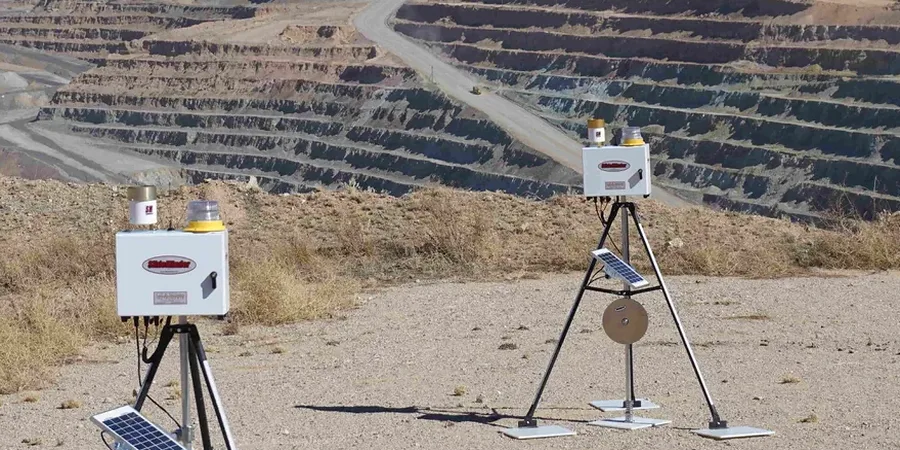
The types of projects that demand this specialized geotechnical expertise are diverse and foundational to Savannah's growth. Urban commercial developments frequently require deep basements for parking in tight downtown lots, necessitating complex earth retention systems and dewatering plans. Critical infrastructure upgrades, such as the installation of new deep sewer trunk lines, stormwater detention vaults, and utility tunnels, are impossible without extensive trenching through unpredictable soils. Large-scale industrial and port expansion projects along the Savannah River often involve massive earthmoving and the creation of cofferdams for constructing new dockside structures. Across all these applications, continuous geotechnical excavation monitoring is the non-negotiable feedback loop, using instruments like inclinometers and piezometers to verify that the ground is behaving as predicted and to offer early warning of any developing failures. Ultimately, the successful execution of an excavation in Savannah is a testament to meticulous planning that respects the delicate balance between the built environment and the powerful natural forces of the coastal geology.
Common questions
What are the primary geotechnical risks associated with excavating in Savannah's sandy soils?
The main risks are instability from loose, saturated sands leading to sloughing or sudden collapse of excavation walls, and 'boiling' or quick conditions at the base caused by uncontrolled groundwater inflow. High groundwater levels can undermine even well-designed support systems, making thorough dewatering and positive drainage a prerequisite for safe work.
When is a geotechnical investigation mandatory before starting an excavation project in Georgia?
While not always a standalone legal mandate for every minor dig, a thorough geotechnical investigation is practically and professionally mandatory for any substantial excavation, especially those exceeding five feet in depth. It is the essential basis for the competent person's hazard assessment required by OSHA Subpart P and for designing any engineered shoring system to meet FHWA standards.
What is the role of a 'Competent Person' in excavation safety according to US standards?
OSHA defines a Competent Person as someone capable of identifying existing and predictable hazards in the surroundings, who is authorized to take prompt corrective measures to eliminate them. On an excavation site, this individual performs daily and as-needed inspections of the pit, shoring, and atmosphere, ensuring the trench remains safe for worker entry.
How do I know if my project requires an engineered shoring design instead of simple sloping?
An engineered design is required when soil conditions are too weak for stable sloping, when space constraints prevent open-cut methods, or when the excavation depth exceeds 20 feet. In Savannah, the presence of soft clays and a high water table often makes sloping to a safe angle impractical, necessitating a professionally designed system like sheet piling or soil nailing.
Location and service area
We serve projects across Savannah Georgia and surrounding areas.