Foundation systems in Savannah, Georgia, represent far more than structural support—they are the critical interface between a building and one of the most challenging coastal geotechnical environments in the southeastern United States. The category of foundations encompasses the full spectrum of subsurface investigation, geotechnical analysis, structural design, and construction methodologies required to transfer loads safely into the ground while resisting settlement, scour, and the relentless influence of moisture. In Savannah’s historic districts, where centuries-old structures coexist with modern developments, foundation decisions directly affect building longevity, occupant safety, and compliance with rigorous preservation standards. The low-lying topography, proximity to the Savannah River, and extensive marshlands make this category indispensable for any project that places a permanent load on the ground, from single-family homes in Ardsley Park to industrial warehouses along the port corridor.
Savannah’s geology is dominated by Quaternary-age deposits of the Atlantic Coastal Plain, characterized by alternating layers of loose to medium-dense sands, soft silty clays, and organic-rich marsh sediments. Much of the city rests on the Wicomico and Penholoway marine terraces, where the upper 10 to 20 feet typically consist of medium-fine sands with varying silt content, underlain by the stiff, overconsolidated clays of the Hawthorn Formation. Groundwater is notoriously high, often within 3 to 5 feet of grade, and the area’s flat terrain—averaging only 20 feet above mean sea level—exacerbates drainage issues and soil saturation. These conditions create significant challenges for conventional shallow footings, as differential settlement, heave during wet-dry cycles, and loss of bearing capacity in saturated sands are well-documented local phenomena. For deep foundations, the presence of dense sand layers and occasional cemented zones demands careful selection of pile types and installation methods.
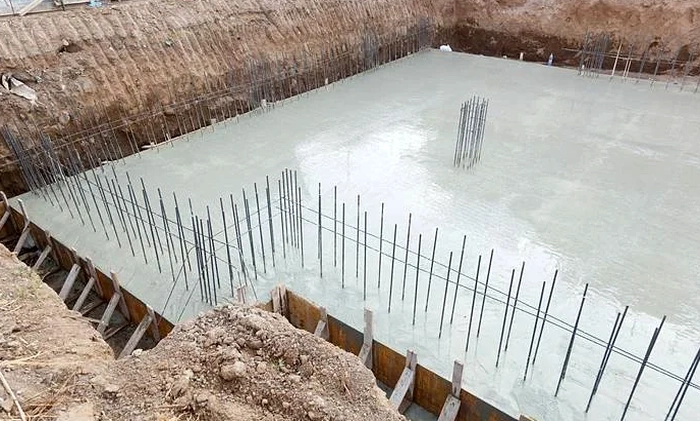
Regulatory oversight in Savannah falls under the Georgia State Minimum Standard Building Code, which adopts the International Building Code (IBC) with state-specific amendments. Chapter 18 of the IBC governs soils and foundations, requiring geotechnical investigations in accordance with IBC Section 1803 for all structures except certain light-frame residential projects. The City of Savannah Development activities Department enforces these provisions and mandates that foundation designs be sealed by a Georgia-licensed professional engineer. For projects within the Coastal Zone, additional review by the Georgia Department of Natural Resources may apply under the Coastal Marshlands Protection Act, particularly when foundations could impact jurisdictional wetlands. The American Society of Civil Engineers’ ASCE 7 standard for minimum design loads is also referenced, with local wind speeds and flood hazard maps from FEMA directly influencing foundation elevation and anchorage requirements in Special Flood Hazard Areas.
The types of projects requiring specialized foundation engineering in Savannah are remarkably diverse. Historic masonry buildings in the Landmark District frequently need underpinning and foundation stabilization to address centuries of settlement without compromising original fabric. New construction on the city’s expansive marsh-edge lots often demands pile foundation design using driven timber or prestressed concrete piles to reach competent bearing strata below soft organic layers. Industrial facilities near the Port of Savannah, including cold storage warehouses and intermodal terminals, require heavy-load foundations capable of supporting dynamic equipment and container stacks on soils prone to vibration-induced densification. Coastal residential developments on barrier islands like Tybee Island face additional challenges from storm surge and erosion, making elevated pile-supported structures the standard approach. Even seemingly straightforward slab-on-grade projects benefit from rigorous geotechnical evaluation to mitigate moisture intrusion and sulfate attack on concrete in Savannah’s aggressive soil chemistry.
Available services
Common questions
What are the most common foundation problems in Savannah, Georgia?
The most prevalent foundation issues in Savannah stem from high groundwater tables and expansive clay lenses within the coastal plain soils. Differential settlement occurs when moisture fluctuations cause soft organic layers to compress or desiccated clays to shrink. Saturated sands can lose bearing capacity during heavy rain events, while sulfate-rich soils attack concrete. Older structures in historic districts also face gradual settlement from long-term consolidation of underlying marsh deposits, often requiring underpinning or supplemental pile support to arrest movement.
How do Savannah’s coastal conditions influence foundation type selection?
Coastal conditions in Savannah demand foundations that resist both static groundwater pressure and dynamic storm loads. Elevated pile foundations are standard in flood-prone areas because they lift the structure above base flood elevation while transferring loads to deeper, more stable strata. The shallow water table eliminates most basement designs and requires robust waterproofing for any below-grade construction. Scour potential near waterways and the corrosive salt-laden atmosphere also influence material choices, pushing designers toward treated timber, epoxy-coated steel, or high-density concrete piles.
What geotechnical investigations are required before designing a foundation in Savannah?
The International Building Code, adopted by Georgia, mandates a geotechnical investigation for most structures under IBC Section 1803. This typically includes soil borings with standard penetration testing to characterize stratigraphy, laboratory testing for shear strength and consolidation parameters, and groundwater monitoring. For deep foundation projects, cone penetration testing provides continuous soil profiles. The resulting report must address bearing capacity, settlement potential, lateral earth pressures, and any special considerations like liquefaction susceptibility or expansive soil presence before a Georgia-licensed engineer can seal the foundation design.
Are there special foundation requirements for Savannah’s historic district?
Yes, Savannah’s Landmark Historic District imposes additional review through the Historic Preservation Commission. Foundation work on contributing structures must preserve original materials and appearance wherever feasible, often requiring minimally invasive techniques like micropiles or helical piers installed from the interior. The Savannah Historic District Zoning Ordinance mandates that any visible foundation alterations remain compatible with the building’s period of significance. Engineers must coordinate closely with preservation officials to balance structural safety with historical integrity, frequently resulting in customized underpinning solutions that stabilize without altering the streetscape.
Location and service area
We serve projects across Savannah Georgia and surrounding areas.